

 wellnessfitpro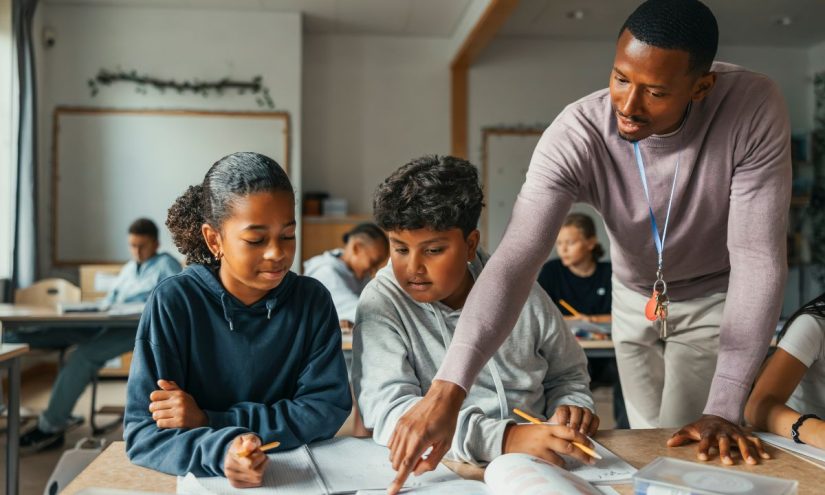
Get stories like this delivered straight to your inbox. Sign up for The 74 Newsletter
“If you want to uplift women and girls, we must first make sure the men and boys are ok.” Recently, Maryland Gov. Wes Moore shared those words with the crowd who gathered to hear him announce his administration’s investment of $19 million in a “Grow-Your-Own Educators Grant Program.”
The historic investment in growing the teacher workforce, with an emphasis on male educators, is part of a number of initiatives Moore’s Democratic administration is taking to address the crisis of young men and boys in his state. He previously created Maryland’s Young Men and Boys Initiative within the Governor’s Office of Children to focus on mentorship, educational support and community resources that combat systemic disadvantages.
An objective study of the state of mental health, education and employment of men and boys in America would lead to only one conclusion: they are in a state of crisis. Nationally, two-thirds of those in the top 10% of high school classes are young women, while young men make up two-thirds of the bottom 10%.
In Maryland, boys scored 11 points lower than girls on the National Assessment of Educational Progress’s Grade 8 reading assessments, one of the largest gaps in the nation. Boys in Maryland remain behind throughout high school as only 82.6% graduate high school compared to 88.8% for girls.
For those young men who do graduate from high school, fewer and fewer are choosing to attend college. That choice is having a detrimental impact on young men. According to the Bureau of Labor Statistics, one-third of young men with only a high school degree are out of the labor force.
America needs more teachers, but the crisis among men and boys highlights how much America needs more male teachers, in particular. Nationally, men account for just 23% of teachers, down from 33% a generation ago. Similarly, in Maryland less than one in four teachers are men. The research is clear: Male educators influence student discipline, engagement, expectations, and academic outcomes for all students, but especially for boys.
That’s why the American Institute for Boys and Men is helping launch the Male Educator Network (MEN), which will answer the call of elected officials at the local, state, and federal level looking for policy solutions to the growing shortage of male educators. MEN will also give the over 700,000 current and future male teachers in America the first national association dedicated solely to their long-term success from high school, through college, to graduate school, and throughout their career in education.
Already a bi-partisan group of governors is raising awareness about how young men and boys are struggling to show up in their schools, homes, workplaces, and communities. That includes ensuring young men and boys are not negatively impacted by the shortage of male teachers.
In response to the growing crisis of mental health among young men and boys in California, Democratic Gov. Gavin Newsom last year issued an executive order directing state agencies to boost male recruitment in education and expand mentorship opportunities. Recently, California invested over $2 million in a marketing campaign to attract men to join the teacher workforce.
In Michigan, Democratic Gov. Gretchen Whitmer signed an executive directive to boost male enrollment in post-secondary education and vocational training, including teacher apprenticeships. Michigan is taking a comprehensive approach with its Michigan Educator Workforce Initiative, which helps provide full financial support including tuition and fees to future teachers while enabling them to earn an income through a registered apprenticeship program.
In Utah, Republican Gov. Spencer Cox raised the alarm nearly three years ago when he established the Task Force on the Wellbeing of Men and Boys. The task force was created to propose and implement policy solutions centered on addressing mental health, workforce and education.
In Connecticut, Democratic Gov. Ned Lamont took time out of his 2025 State of the State address to challenge his legislature: “Here is a DEI initiative, which folks on both sides of the aisle may appreciate. We’re doing outreach to get more men into teaching. Statistically, boys are most likely to be the disconnected youth. A few more male mentors in the classroom – and coaching – just might help. What say you, Education Committee?” State policymakers in Virginia and Washington have also introduced bills this session to study the state of men and boys and respond with policy solutions. Last month, a bi-partisan group of lawmakers in Virginia passed SB447, establishing an advisory commission for men and boys. The commission is responsible for issuing annual reports with legislative recommendations. In Washington, a bill to establish a commission was voted out of committee but did not move forward as it failed to receive a public hearing by the cutoff date for the fifth year in a row.
The growing interest in the crisis of men and boys is incredibly important but not enough. Interest and attention must be matched with timely, research-based, policy and budgetary solutions focused not only on recruitment but retention of male educators. Far too many male teachers leave the profession each year, many due to isolation and lack of support from other men in education. Male educators need one another to not only address the growing demands of being a teacher, but also to access the training and network to move up in the profession. That’s what the Male Educator Network can bring.
Focusing on men and boys should not distract us from the plight of women and girls. We can do both. We can’t have a world of thriving women in a world of struggling men. Male teachers don’t only serve young men and boys, their presence improves the lives of all students.
Did you use this article in your work?
We’d love to hear how The 74’s reporting is helping educators, researchers, and policymakers. Tell us how
Opinion,black students,Black teachers,commentary,opinion,statesOpinion,black students,Black teachers,commentary,opinion,states#Opinion #States #Step #Bring #Male #Teachers #Support #Young #Men #Boys1773171430

