

 wellnessfitpro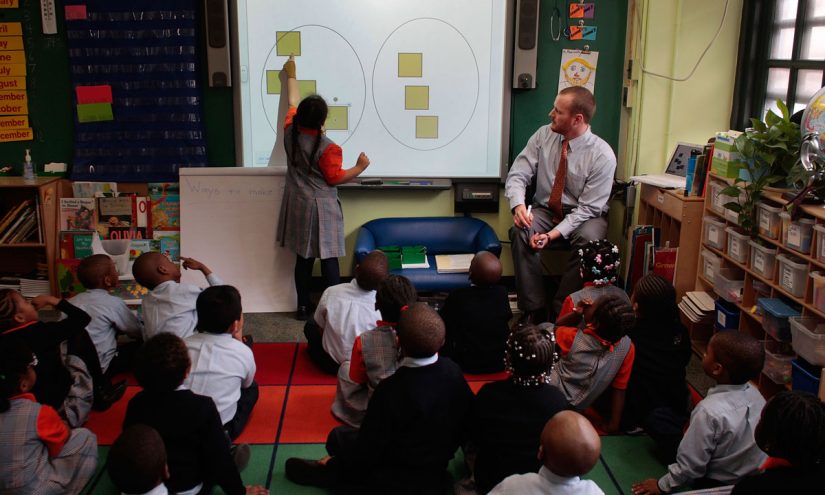
Get stories like this delivered straight to your inbox. Sign up for The 74 Newsletter
A version of this essay originally appeared on “The Next 30 Years” Substack
One of education’s deep problems isn’t discovering success. It’s sustaining it. Again and again, we celebrate high-performing schools at their peak, only to watch — or, more pertinently, fail to notice — when they drift, decline or disappear altogether within a decade. This raises a significant and uncomfortable question: If the high-fliers we celebrate and seek to emulate don’t stay aloft, were they really that good to begin with?
When successful schools lose their momentum, the usual suspects are leadership turnover, staff churn, demographic change, political conflict or the quiet assumption that the success was fragile all along. But many of these factors, particularly staff and leadership changes, are not flaws in the system, they’re features.
The average superintendent typically lasts little more than a single contract cycle. Principals tend to remain only about four years in a given school, with even shorter stints in high-poverty settings. Roughly a third of teachers leave the classroom within five years. Any school improvement model that works only if the adults stay in place isn’t a model; it’s catching lightning in a bottle. What ultimately distinguishes the schools that endure is not whether turnover happens, but whether effective practices have been institutionalized strongly enough to survive it.
Some analysts have begun to demonstrate this durability problem empirically. Chad Alderman recently asked a deceptively simple question: Do “good” schools stay good over time? He found that in Virginia, only half of the schools that were in the state’s top quartile of schools in 2004 remained there in 2024.
This suggests a thought exercise: If we wanted to predict whether a school’s success will last, what should we look for? Not test scores. Not a charismatic principal. Not a compelling origin story. Those things can tell us a school is working now but clearly don’t predict if it will still be working years from now.
Let’s start by acknowledging that schools are not stable organizations occasionally disrupted by turnover. They are — or ought to be — organizations built to function despite turnover.
What follows is best understood as a working hypothesis based on my observations and experience: an attempt to identify the institutional features that seem to appear, again and again, in the schools and systems whose results persist while others fade
Durable schools tend to share a clearly defined instructional core. Not a “philosophy.” Not a mission statement. An operating system. They use common materials, sequence content deliberately and define effective instruction in observable terms. New teachers are acculturated and trained into an existing model rather than invited to invent their own. Durability begins with instructional clarity as the foundation, with consistency as the structure.
Schools that sustain results minimize variation in the things that matter most, particularly foundational literacy and numeracy instruction. They monitor whether the curriculum is actually delivered. They coach toward specific practices. When drift appears, they correct it.
Fragile systems rely on great teachers. Durable systems assume ordinary teachers and build routines strong enough to support them. Durable systems assume turnover and design accordingly.
One of the more revealing lessons I took from my reporting on New York City’s Success Academy charter school network is that its results cannot plausibly be explained by stable staffing. Neither does it recruit from elite colleges and universities. Teacher turnover in the network has long been substantial, in part because the demands placed on staff are unusually intense. Yet it continued to produce unusually strong academic outcomes, even as it rapidly grew from a single school to more than 50.
As I wrote in How the Other Half Learns:
The de facto model that has evolved is more like the U.S. Army or the Marines: a small and talented officer corps surrounded by enlisted men and women who do a tour, maybe two, then muster out, with new recruits reporting for duty. Teacher turnover, lack of experience and continuity, is widely assumed to be a problem, particularly in urban schools. But it’s never suggested that our military would be better if only soldiers stayed in uniform longer. So far, the relative inexperience of Success Academy teachers hasn’t seemed to compromise their effectiveness.
The lesson isn’t simply that this model works, but that its effectiveness depends on turning instructional expectations into organizational routines rather than individual discretion. In practice, this meant that first-year teachers were not improvising their own curriculum or instructional routines. Lessons were tightly sequenced, materials were standardized across the network and instructional leaders conducted frequent classroom walkthroughs to ensure the model was being executed as designed. Consistency was not aspirational. It was operational.
Nearly a decade after my reporting, Success Academy’s academic results remain consistently strong, suggesting the model was not a temporary reform-era peak but an institutional system capable of sustaining performance despite high staff turnover. That said, its founder, architect and culture-keeper, Eva Moskowitz, is still in place, meaning the ultimate test of its durability is still to come.
Moreover, I don’t think Success Academy’s model is universally portable. New York City is a magnet for ambitious young people willing to endure an intense professional environment for a few years. It’s far from certain that the same dynamic would apply in smaller or less attractive labor markets. Staff churn would likely be fatal in such places.
Looking back, education reform spent decades searching for the miracle school — the visionary leader, the transformative model, the “it’s being done” proof point that dramatic improvement was possible. We found many such schools. What we rarely built were institutions designed to sustain their promising results. Education has never lacked miracle schools and stories. The real challenge isn’t identifying successful schools but learning how to recognize whether their success is institutional or temporary.
Durable success, not temporary breakthroughs, is what the field most needs to find, study and emulate. In a Substack piece, my pal Holly Korbey notes that Kobe Bryant studied Michael Jordan to raise his game, so educators should do the same. I agree, but give me John Stockton, Vince Carter, Cal Ripken or Lou Gehrig as models: guys who were not just good but managed to stay that way for a long, long time.
Did you use this article in your work?
We’d love to hear how The 74’s reporting is helping educators, researchers, and policymakers. Tell us how
Opinion,commentary,education reform,opinion,success academy,teacher turnoverOpinion,commentary,education reform,opinion,success academy,teacher turnover#Opinion #Good #Schools #Arent #Derailed #Staff #Turnover #Theyre #Built1772279417

